

5 Questions Every First-Time Homebuyer Should Ask Before Getting Pre-Approved
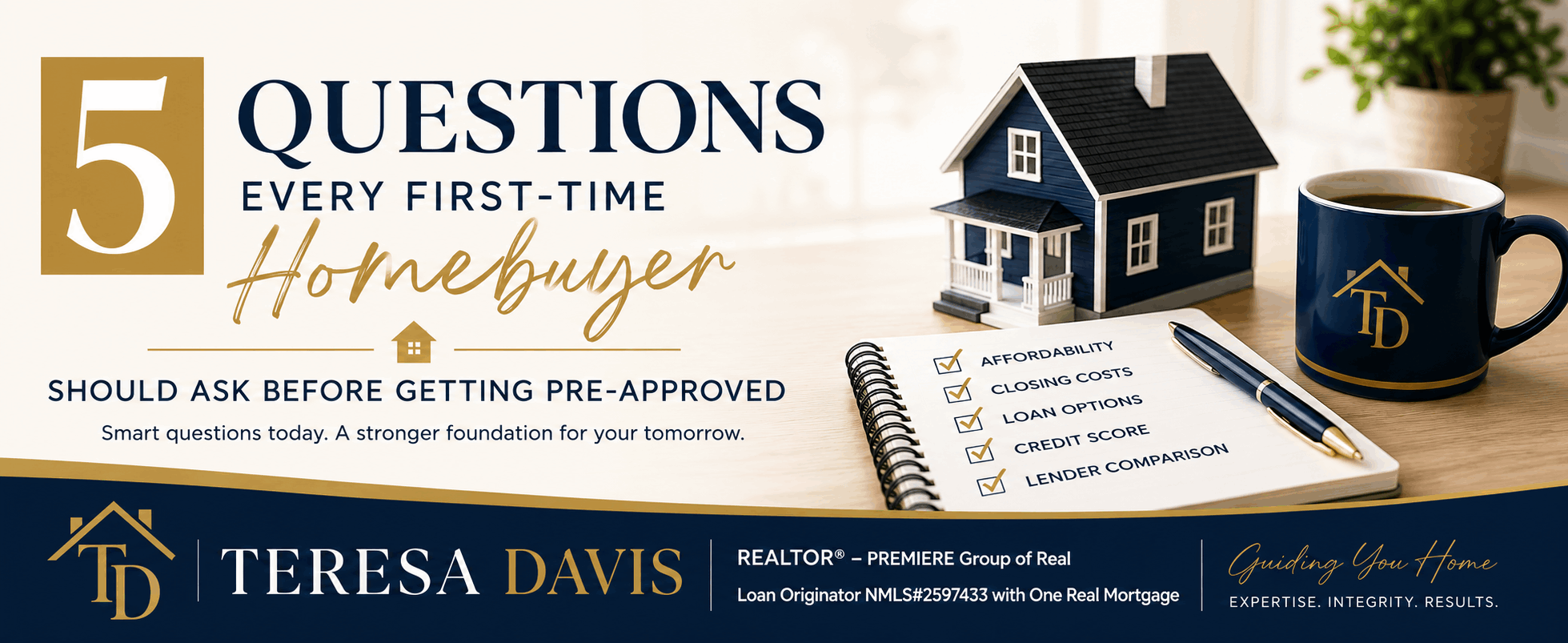
Buying your first home is exciting, but before you apply for a mortgage, it is important to understand what you are taking on financially. Getting pre-approved is one of the first steps in the home-buying process, but asking the right questions beforehand can help you make informed decisions and avoid unexpected expenses later.
Here are five questions every first-time homebuyer should ask before getting pre-approved.
1. How Much Home Can I Comfortably Afford?
One of the biggest mistakes first-time buyers can make is shopping based only on the maximum amount a lender approves rather than what comfortably fits their monthly budget.
A lender determines how much you may qualify to borrow, but only you know how much you are comfortable spending each month while still maintaining your lifestyle, building savings, and meeting other financial goals.
When determining your budget, consider:
- Monthly principal and interest payment
- Property taxes
- Homeowners insurance
- Mortgage insurance, if applicable
- Homeowners association dues, if applicable
- Utilities
- Maintenance and repairs
- Emergency savings
- Other monthly debts and financial goals
Just because you qualify for a certain amount does not necessarily mean you should spend that much. Choosing a payment that fits comfortably within your budget can help reduce financial stress after you move into your new home.
2. How Much Should I Save for Closing Costs?
Many first-time homebuyers focus primarily on the down payment and are surprised to learn that there are additional expenses involved in purchasing a home.
Closing costs may include:
- Loan origination or lender fees
- Appraisal fee
- Credit report fee
- Attorney and settlement fees
- Title search and title insurance
- Recording fees
- Homeowners insurance premiums
- Prepaid property taxes
- Initial escrow deposits
In some transactions, a buyer may be able to negotiate for the seller to contribute toward certain closing costs. Whether that is possible depends on the loan program, market conditions, property, seller, and terms of the offer.
It is also important to keep money available for inspections, due diligence expenses, moving costs, utility deposits, and repairs or purchases that may be needed after closing. Having a realistic savings plan before you begin shopping can make the process much less stressful.
3. Which Loan Program Fits My Situation?
Not every mortgage works the same way, and the best loan option depends on your credit, income, savings, property type, military eligibility, location, and long-term financial goals.
Conventional Loans
Conventional financing may be a good option for buyers with established credit, stable income, and sufficient funds for the required down payment and closing costs. Some conventional programs allow qualified first-time buyers to purchase with a relatively low down payment.
FHA Loans
FHA loans are insured by the Federal Housing Administration and may offer more flexible credit and down-payment requirements. They also include mortgage insurance requirements that buyers should understand before choosing this option.
VA Loans
VA loans are available to eligible veterans, active-duty service members, and certain surviving spouses. Qualified borrowers may be able to purchase without a down payment, and VA loans generally do not require monthly mortgage insurance.
USDA Loans
USDA loans may be available for eligible properties in qualifying rural and suburban areas. Qualified buyers may be able to purchase without a down payment, subject to household income, property eligibility, and other program requirements.
A knowledgeable loan professional can explain the benefits, costs, and qualification requirements of each program and help you compare the options that may fit your circumstances.
4. How Does My Credit Score Affect My Interest Rate?
Your credit history and credit score are among the factors lenders consider when evaluating your mortgage application and determining the interest rate and loan terms that may be available to you.
In general:
- A stronger credit profile may help you qualify for more favorable loan terms.
- A lower interest rate may reduce your monthly principal and interest payment.
- Even a modest difference in interest rate can affect the total amount paid over the life of the loan.
- Credit requirements and pricing vary by lender and loan program.
If your credit score is not where you would like it to be, do not assume that homeownership is out of reach. A loan professional can review your overall credit profile, explain which factors may be affecting it, and help you understand whether taking specific steps before applying could improve your available options.
Before paying off accounts, opening new credit, closing credit cards, or making major purchases, speak with a qualified loan professional. Actions that seem helpful can sometimes affect mortgage qualification in unexpected ways.
5. Should I Compare Multiple Lenders?
Comparing lenders can help you better understand the financing options available to you. Mortgage terms can vary, even when lenders are reviewing the same borrower and property.
When comparing lenders, look beyond the advertised interest rate and review:
- Interest rate
- Annual percentage rate, or APR
- Discount points
- Loan origination and lender fees
- Estimated closing costs
- Mortgage insurance requirements
- Available loan programs
- Estimated monthly payment
- Communication and responsiveness
- Ability to meet the anticipated closing timeline
Interest rate is important, but it should not be the only factor in your decision. Working with a lender who communicates clearly, provides accurate estimates, explains your options, and works closely with the other professionals involved can make the home-buying process much smoother.
As both a REALTOR® and licensed Loan Originator, I believe buyers deserve clear information so they can make decisions based on their financial goals and complete loan terms rather than pressure or incomplete comparisons.
Final Thoughts
Buying your first home is a major financial decision. Taking time to ask these five questions before getting pre-approved can help you establish a practical budget, understand your loan options, and prepare for the expenses involved in purchasing a home.
Every buyer's situation is different, which is why personalized guidance matters. Whether you are just beginning to explore homeownership or are ready to start looking at homes, understanding your financing options is an important first step.
Planning to Buy a Home in the North Carolina Piedmont Triad?
If you are considering buying a home in Davidson, Randolph, Guilford, Forsyth, or a surrounding North Carolina county, I can help you understand both the home-buying process and the mortgage options that may be available to you.
Contact Teresa Davis at (336) 688-3100 or TeresaDavisHomes@gmail.com to discuss your goals, ask questions, and identify the next steps that make sense for your situation.
Frequently Asked Questions
Is getting pre-approved the same as being approved for a mortgage?
No. A pre-approval is an initial review of your income, assets, credit, debts, and other financial information. It is not a guarantee of financing. Final loan approval generally occurs after a property is selected and the lender completes underwriting, verifies documentation, reviews the appraisal, and confirms that all loan conditions have been satisfied.
Does getting pre-approved affect my credit score?
A mortgage pre-approval commonly involves a hard credit inquiry, which may have a small and temporary effect on your credit score. Credit-scoring models may treat multiple mortgage inquiries made within a designated shopping period as a single inquiry for scoring purposes, although the applicable timeframe can vary by scoring model.
How long does a mortgage pre-approval last?
Many mortgage pre-approvals are valid for approximately 60 to 90 days, but the timeframe varies by lender. Updated income, asset, employment, or credit documentation may be required if the pre-approval expires or your financial circumstances change.
Can I buy a home with less than a 20% down payment?
Yes. Several loan programs allow qualified buyers to purchase with less than 20% down, and some programs may offer zero-down-payment financing for eligible borrowers and properties. Qualification requirements, mortgage insurance, fees, and other loan terms vary.
This information is provided for general educational purposes and is not a commitment to lend, a guarantee of loan approval, or financial, legal, or tax advice. Mortgage programs, interest rates, fees, credit requirements, and eligibility guidelines are subject to change. Buyers should consult qualified real estate, mortgage, legal, tax, and financial professionals regarding their individual circumstances.
```
Categories
Recent Posts



Teresa Davis
REALTOR® and Licensed Loan Originator License ID: 308937 / NMLS# 2597433